
Coinbase Reduces Workforce by 14%: How AI Is Replacing Jobs at Top Crypto Companies in 2026
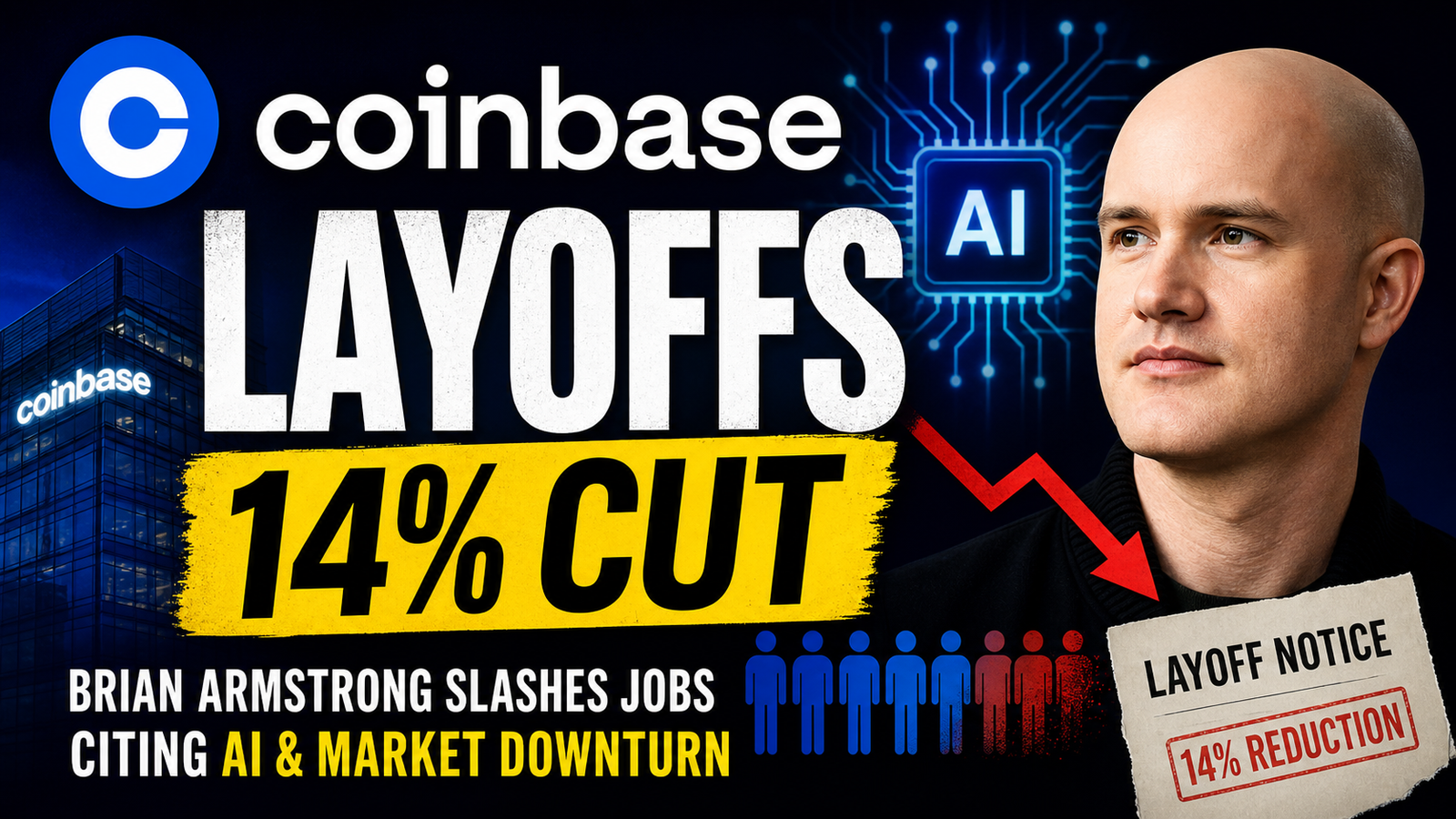
Brian Armstrong, CEO of Coinbase, announced a major workforce reduction of approximately 14%, citing two key reasons: a volatile crypto market and the rapid rise of AI changing how work gets done.
So if you have been following the crypto and tech space recently, you probably already have a feeling that something big was brewing at Coinbase. And well, according to me, this announcement,though not entirely shocking, is still a moment worth pausing and really thinking about, because it touches something much bigger than just one company letting people go.
On May 5, 2026, Brian Armstrong, the CEO of Coinbase, shared an internal email publicly, confirming that the company is cutting around 14% of its total workforce. That is a significant number of real people, real families, real livelihoods. And I think it is important that we talk about both sides of this story, because there is a lot happening here that affects all of us, not just Coinbase employees.
So why is Coinbase doing this right now?
According to Armstrong, there are two main forces driving this decision. First, the crypto market is still going through a rough patch. Even though Coinbase is well-capitalized and has diversified revenue streams, the business remains volatile quarter to quarter. The leadership team believes they need to trim down costs now, so the company can come out leaner and faster when the market inevitably turns around. And historically speaking, crypto does turn around.
Second, and this is the part that I think everyone should pay close attention to, AI is fundamentally changing how work gets done. Armstrong openly stated that engineers are now using AI to ship in days what used to take a full team weeks. Non-technical employees are writing production-level code. Entire workflows are being automated. In short, a small team powered by AI can now do what a large team used to do. And Coinbase wants to rebuild itself around that new reality.
What does Coinbase plan to change structurally?
This is not just a headcount reduction. Armstrong is talking about rebuilding the entire operating structure of Coinbase. Think fewer management layers, with a maximum of five layers below the CEO and COO. Leaders will have more direct reports, sometimes as many as 15 or more. Every manager must also be an active individual contributor, not a pure administrator. And they are experimenting with what they call AI-native pods, which in some cases could mean a single person handling engineering, design, and product management all at once, assisted by AI agents.
For those who are affected, Coinbase has promised a minimum of 16 weeks of base pay, plus 2 additional weeks for every year worked, coverage of the next equity vest, and 6 months of COBRA health insurance. Employees on work visas will receive extra transition support. By most corporate standards, that is actually a fairly generous package, though I know no severance package truly makes up for the shock of losing your job suddenly.
The bigger picture: AI is helping some and hurting others
This is where things get a little uncomfortable to talk about, but I think we have to. AI is genuinely making some people more powerful and more productive than ever before. If you are someone who knows how to use AI tools, how to prompt effectively, how to manage AI agents, your value in the job market is skyrocketing right now. Companies like Coinbase are actively looking for people who can do the work of three or four people with the help of AI.
But on the flip side, for people in more traditional roles, especially in middle management, coordination-heavy jobs, or repetitive technical tasks, the reality is that AI is already beginning to replace those functions. And that is not a scare tactic. That is just what the data and the corporate decisions are telling us right now, in real time.
According to me, the most honest thing we can say is this: AI is not evil, but it is not neutral either. It is a tool that amplifies whoever is holding it. If companies use it responsibly, with genuine care for the people affected, it could lead to a more productive and even more humane future of work. But if the transition is handled poorly, with people simply being discarded without proper support or retraining, it could create real economic suffering for millions.
What does the future look like and what should you do?
I think the Coinbase situation is genuinely a preview of what many large companies will be doing over the next two to three years. We are going to see more flat org structures, more AI-assisted individual contributors, and fewer traditional management roles. The companies that learn to integrate AI thoughtfully will grow faster. The workers who adapt and learn to collaborate with AI rather than compete against it will have more opportunities than ever.
For readers who are in the tech or crypto space, now is genuinely the best time to start learning AI-native tools, prompt engineering, and how to manage or supervise AI workflows. These are not futuristic skills anymore. They are today’s most in-demand skills.
And for those directly affected by the Coinbase layoffs, I truly hope the transition support helps, and that the next chapter is even better. Coinbase itself said it, and I believe it is true: talented people find their way forward. The world is changing fast, but human creativity, judgment, and adaptability still matter more than any algorithm.
Read More:







ileemyjutkqtyxkvkfyhyuhwkukodo