Google Quantum Computing Breakthrough: Is Bitcoin at Risk?
When I first saw headlines claiming that a quantum attack could break Bitcoin in just 9 minutes, I honestly thought this might be one of those exaggerated crypto fears that surface every few months.
But this time, the conversation feels more serious.
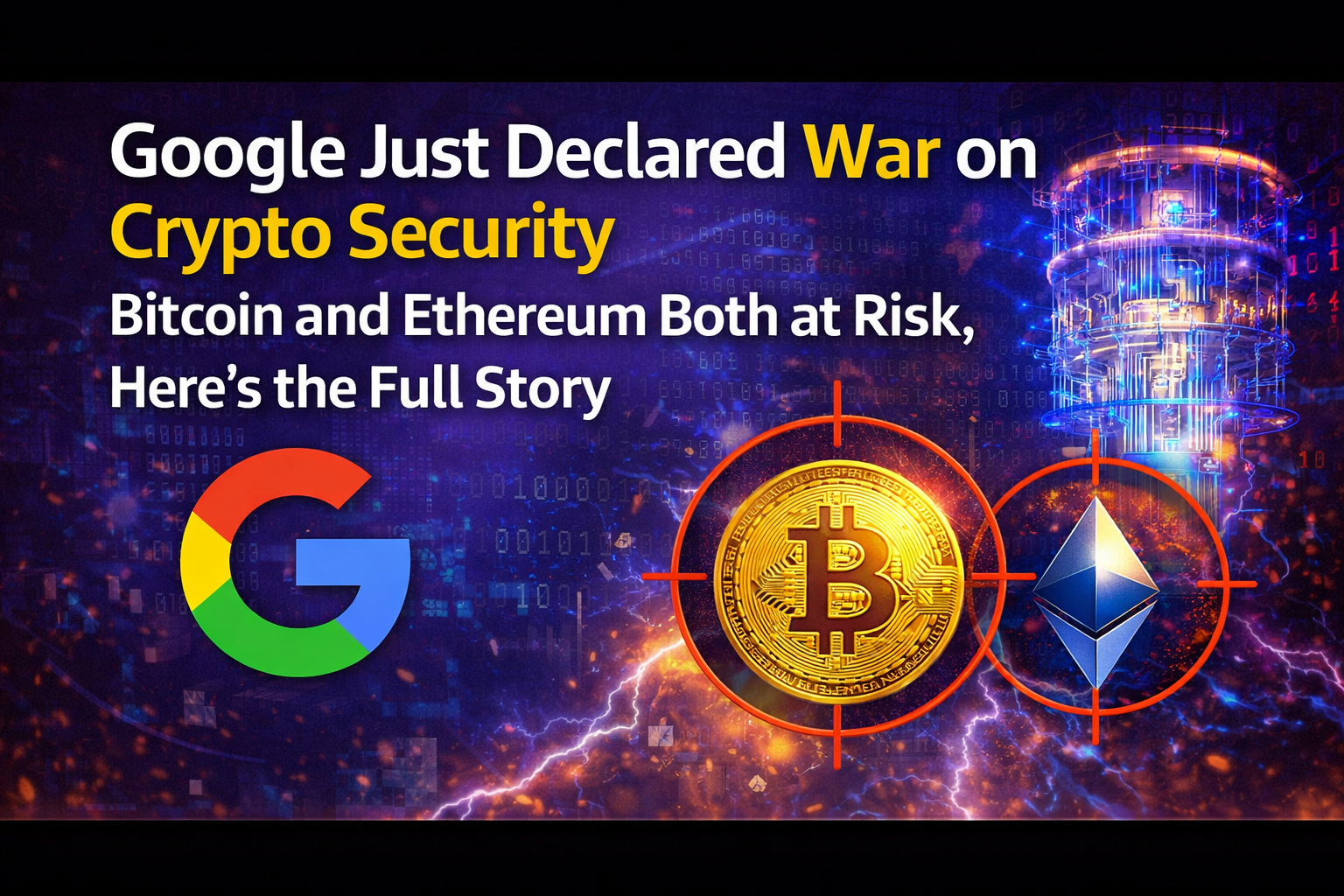
A viral post, referencing research linked to Google’s quantum computing team, suggests that breaking Bitcoin’s cryptography may require far fewer quantum resources than previously believed- potentially under 500,000 qubits. Even more striking, the claim mentions a 41% success rate in just 9 minutes, which is faster than Bitcoin’s average block time.
At first glance, this sounds alarming. But when I dug deeper, the reality turned out to be more nuanced.
What Is the Actual Threat?
To understand this, we need to break it down simply. Bitcoin relies on cryptography- specifically public-private key encryption, to secure wallets and transactions. Quantum computers, in theory, could:
- Reverse-engineer private keys from public keys
- Break current encryption algorithms
- Compromise wallet security
This is where the fear comes from. I used to think this was a distant, almost sci-fi-level problem. But recent research suggests it might arrive sooner than expected, possibly within the next decade.
Why “9 Minutes” Doesn’t Mean Bitcoin Is Broken
The “9-minute attack” headline sounds scary, but it’s important to understand the context. For such an attack to happen:
- A sufficiently powerful quantum computer must exist (it doesn’t yet)
- The attacker must target vulnerable wallets (not all wallets are exposed)
- The timing must align perfectly with transaction broadcasts
I think headlines often simplify complex research, which can create unnecessary panic. Right now, practical quantum attacks on Bitcoin are not possible with current technology.
CZ’s Take: No Need to Panic
Amid the growing concern, Changpeng Zhao (CZ) shared a calm and practical perspective.
His main point was simple: Crypto can upgrade.
He explained that the solution lies in moving toward quantum-resistant (post-quantum) cryptographic algorithms. I personally found this reassuring. Because unlike traditional systems, crypto networks can evolve through upgrades.
The Real Challenge: Upgrading a Decentralized System
While upgrading sounds easy in theory, it’s much harder in practice. CZ highlighted several real-world challenges:
1. Decentralized Decision-Making
There’s no central authority to enforce upgrades.This means:
- Developers must agree
- Communities must support changes
- Miners and validators must adopt them
I think this process can take time and often leads to debates.
2. Risk of Forks
Different groups may support different solutions. This could result in:
- Network splits (forks)
- Multiple versions of the same blockchain
We’ve seen this happen before in crypto history.
3. Migration Complexity
Users holding crypto in self-custody wallets may need to:
- Move funds to new quantum-resistant wallets
- Follow technical upgrade steps
I feel like this could be challenging for beginners.
What Happens to Old Wallets?
One of the most interesting points CZ raised was about old wallets- especially those that haven’t moved funds in years. This includes wallets believed to belong to Bitcoin’s creator, Satoshi Nakamoto. If quantum computing becomes powerful enough:
- Unmoved coins could become vulnerable
- Attackers might target inactive wallets
CZ even suggested that such coins might need to be locked or effectively burned to prevent exploitation. I thought this was a fascinating idea, it shows how deep the implications can go.
Impact on Normal Users
Now the most important question: how does this affect everyday crypto users?
1. No Immediate Danger
Right now, there is no active quantum threat. I think users should stay informed, but not panic.
2. Future Wallet Upgrades
In the future, users may need to:
- Upgrade wallets
- Move funds to new addresses
- Follow security updates
This is similar to updating software- just on a larger scale.
3. Better Security Awareness
This situation highlights the importance of:
- Using secure wallets
- Avoiding address reuse
- Staying updated with network changes
Impact on Exchanges
Crypto exchanges like Binance will also play a major role.
They can:
- Implement upgrades faster
- Protect user funds centrally
- Guide users through transitions
I personally think exchanges may act as a buffer during the transition phase.
Impact on the Crypto Industry
Zooming out, this could actually be a positive development.
1. Push Toward Innovation
Quantum threats force the industry to:
- Improve security
- Develop stronger cryptography
- Build future-proof systems
2. Natural Selection of Projects
CZ mentioned that weaker or inactive projects may fail to upgrade. This could:
- Remove outdated projects
- Strengthen the overall ecosystem
I think this kind of “cleanup” is common in evolving industries.
3. New Opportunities
This shift could create opportunities in:
- Post-quantum cryptography
- Secure blockchain infrastructure
- Advanced wallet solutions
A Balanced Perspective
While the headlines sound dramatic, I don’t think this is an immediate crisis. There are still major limitations:
- Quantum computers are not yet powerful enough
- Practical attacks are not feasible today
- The industry has time to prepare
I’ve learned that in crypto, it’s important to separate possibility from reality.
Final Thoughts
When I first saw the claim about a quantum attack breaking Bitcoin in minutes, I thought it might signal a serious threat. But after understanding the full picture, I see it differently.
Yes, quantum computing could challenge current cryptography in the future. But crypto is not static- it evolves.
As CZ pointed out, upgrading to quantum-resistant algorithms is possible, even if it takes time and coordination. Personally, I believe this is less about fear and more about preparation.
Because every major technological shift brings new challenges- and also new solutions. And if history has shown anything, it’s that crypto tends to adapt faster than expected.
Read More: