
BlackRock CEO Larry Fink says “tokenization today is roughly where the internet was in 1996.”
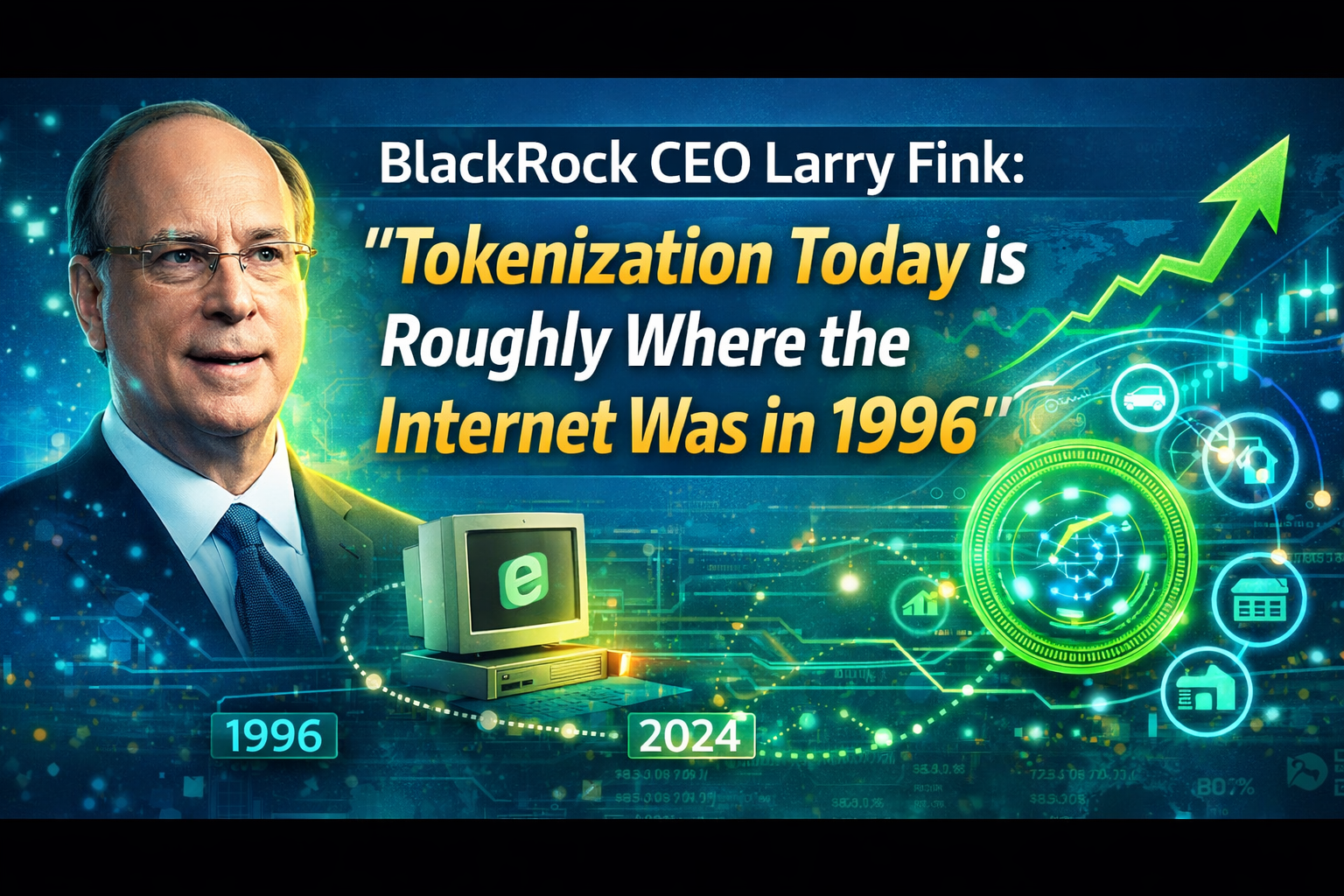
When I first read that tokenization is being compared to the internet in 1996, I paused for a moment. That’s a bold comparison. And honestly, I thought it might just be another exaggerated statement. But then I realized this wasn’t coming from just anyone-it came from Larry Fink, the CEO of BlackRock, one of the largest asset managers in the world.
Along with him, Rob Goldstein also shared a similar view. Both of them believe that tokenization is still in its early stages, much like the internet was in the mid-90s, but it has the potential to reshape global financial markets faster than most people expect.
At first, I wasn’t sure how seriously to take this. But the more I thought about it, the more it started to make sense.
What Is Tokenization, Really?
Before going deeper, I think it’s important to simplify what tokenization actually means.
In simple terms, tokenization is the process of converting real-world assets into digital tokens on a blockchain.
These assets can include:
- Real estate
- Stocks and bonds
- Commodities
- Art and collectibles
I used to think crypto was only about coins like Bitcoin or Ethereum. But tokenization is something much bigger. It’s about bringing traditional assets onto blockchain networks.
And when I understood this, I realized why people like Larry Fink are paying attention.
Why Compare It to the Internet in 1996?
The comparison to the internet in 1996 is actually very interesting.
Back then:
- The internet existed, but very few people used it
- Most businesses didn’t understand its potential
- Infrastructure was still developing
Yet, within a decade, it completely transformed the world.
I think what Larry Fink is trying to say is that tokenization is currently in a similar phase:
- It exists
- It’s growing
- But most people still underestimate it
And if history repeats itself, the growth could be exponential.
The 300% Growth Signal
One of the most important points mentioned was the 300% growth in real-world asset tokenization over the past 20 months.
When I saw that number, I honestly didn’t expect it to be that high.
It made me think- this isn’t just a concept anymore. It’s already happening.
Growth like this usually indicates:
- Increasing adoption
- More institutional involvement
- Expanding use cases
And I feel like this is just the beginning.
Why Big Institutions Are Interested
When companies like BlackRock start talking about something, I believe it’s worth paying attention. These institutions don’t move based on hype. They move based on long-term opportunities.
So why tokenization?
From what I understand, it offers several advantages:
1. Faster Transactions
Traditional financial systems can be slow. Tokenization can make transactions almost instant.
2. Lower Costs
By reducing intermediaries, costs can decrease significantly.
3. Better Accessibility
People can invest in assets that were previously out of reach.
For example, I think about real estate. Normally, you need a large amount of capital to invest. But with tokenization, even small investors could own a fraction of a property.
How This News Helps You as a Reader
Now the real question- how does this affect you?
Because I believe news is only valuable if it gives you some kind of insight.
1. Early Awareness
If tokenization really is at the “internet in 1996” stage, then we are still early. I personally like the idea of being early in something that has long-term potential.
It doesn’t mean jumping in blindly, but it does mean learning and understanding it now rather than later.
2. New Investment Opportunities
Tokenization could open doors to new types of investments.
I used to think investing was limited to stocks, mutual funds, or crypto. But this changes the game.
Now, potentially:
- Real estate
- Fine art
- Private equity
could become more accessible.
3. A Shift in Financial Systems
This isn’t just about investing, it’s about how the entire financial system might evolve. I think we are moving toward a more digital and decentralized structure. And being aware of this shift can help you adapt faster.
4. Long-Term Thinking
One thing I’ve learned is that big trends take time. The internet didn’t change everything overnight. It took years. Similarly, tokenization might take time to fully develop. But those who understand it early may benefit the most.
Is It Too Early or the Right Time?
This is something I keep asking myself. Are we too early? Or is this the perfect time to start paying attention? Honestly, I think it’s somewhere in between.
- It’s early enough that most people don’t fully understand it
- But it’s developed enough that real growth is already happening
That combination is rare.
A Word of Caution
Even though this sounds exciting, I think it’s important to stay realistic. Not every trend succeeds.
There will be:
- Challenges
- Regulations
- Failed projects
I’ve seen how hype can sometimes mislead people in the crypto space. So while tokenization has potential, it also requires careful observation.
My Final Thoughts
When I first read Larry Fink’s statement, I thought it was just another comparison.
But the more I explored it, the more it started to make sense.
Tokenization might not be mainstream yet, but it’s growing rapidly. And if it truly follows a path similar to the internet, we could be looking at a major transformation in how assets are owned and traded.
Personally, I’m not rushing to conclusions. But I am paying attention. Because sometimes, the biggest opportunities don’t look obvious at first. And maybe, just maybe, tokenization is one of those opportunities.



платные справки спб куплю справку срочно