
CoinDCX CEO Says Exchange Paid Nearly 50% of India’s Crypto TDS in FY 2024‑25
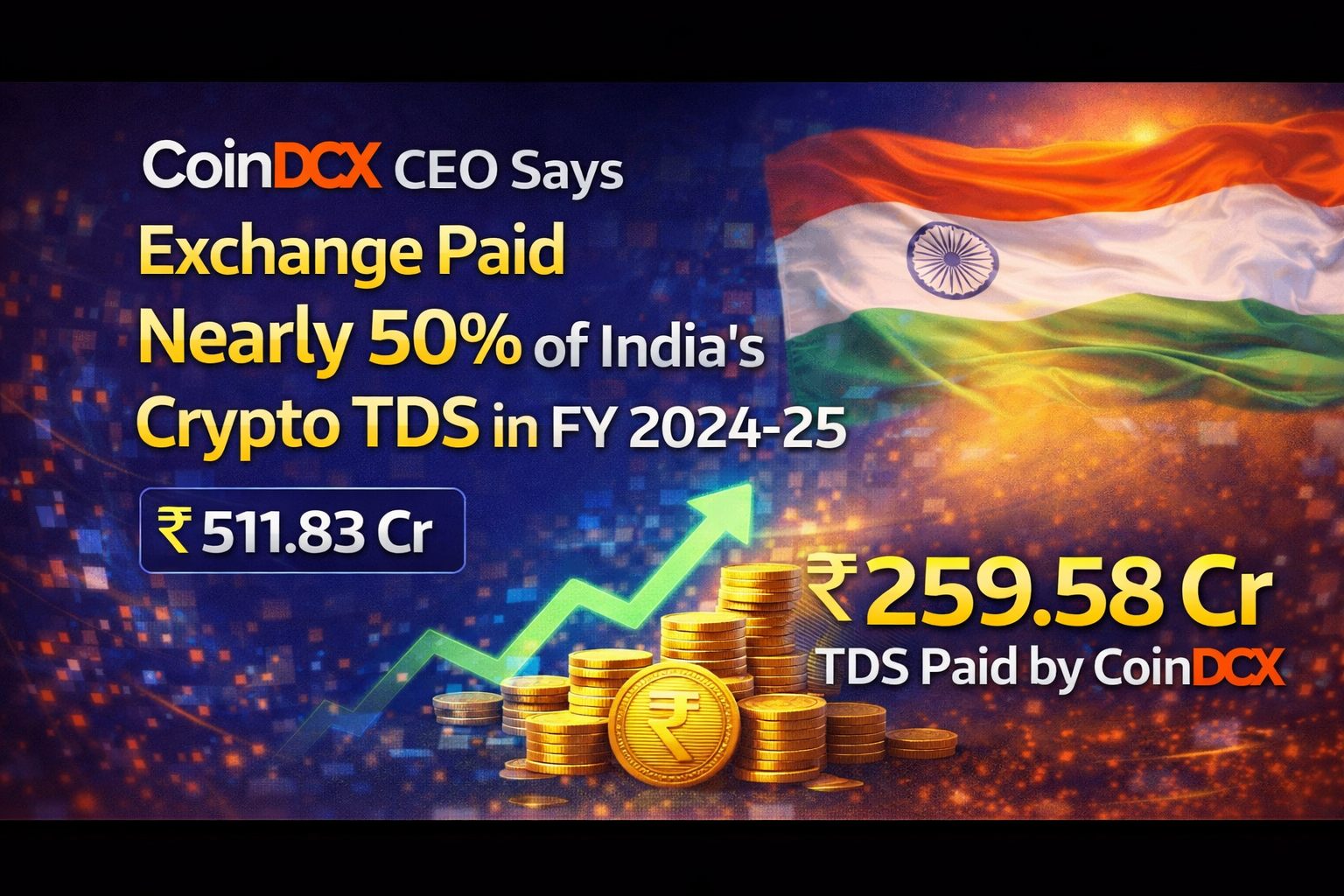
According to data from India’s finance ministry, crypto tax collections through TDS (Tax Deducted at Source) reached ₹511.83 crore in FY 2024-25, marking a 41% increase year-on-year from ₹362.70 crore in the previous year.
What really stood out, however, was a statement from Sumit Gupta, the CEO of CoinDCX. He revealed that CoinDCX alone contributed ₹259.58 crore in TDS, which is nearly 50% of the total crypto TDS collected in India.
At first, I thought this was just a sign of CoinDCX’s market size. But when I thought about it more carefully, it seemed to highlight something much deeper about India’s crypto ecosystem.
Understanding Crypto TDS in India
Before going further, I think it’s important to understand what TDS means in the context of crypto.
In India, a 1% TDS is applied on every crypto transaction. This means that whenever a user buys or sells crypto, 1% of the transaction value is deducted and deposited with the government.
I used to think this was just a minor tax, but in reality, it adds up quickly — especially for active traders. This system was introduced to:
- Track crypto transactions
- Improve tax compliance
- Increase transparency in the market
But over time, it has also created some challenges.
Why CoinDCX’s Contribution Is So Significant
When one exchange contributes nearly half of the total TDS collected, it tells us a few important things.
1. Strong Presence of On-Shore Exchanges
CoinDCX being responsible for such a large share suggests that a significant portion of taxable activity is still happening on Indian exchanges.
I think this shows that despite challenges, local platforms are still playing a major role.
2. Compliance Comes at a Cost
On-shore exchanges like CoinDCX strictly follow Indian regulations. This means:
- They deduct TDS on every transaction
- They report data to authorities
- They operate under full compliance
While this builds trust, it also creates a competitive disadvantage compared to offshore platforms that may not enforce the same rules.
3. Concentration of Activity
This data also suggests that trading activity might be concentrated among a few major platforms. I personally feel that this kind of concentration can shape how the market evolves in the future.
The Bigger Picture: Growth in Crypto Tax Collections
The 41% increase in TDS collections shows that crypto activity in India is still growing. Despite strict regulations, users are still trading, investing, and interacting with digital assets.
At first, I thought high taxes might slow down the market significantly. But these numbers suggest that interest in crypto remains strong. However, growth in tax collection does not always mean growth in healthy market conditions.
It can also reflect:
- Higher compliance
- Increased reporting
- More structured activity
Challenges Faced by Indian Exchanges
While this news highlights CoinDCX’s contribution, it also indirectly points to the challenges faced by Indian exchanges.
1. High Tax Burden
The 1% TDS can reduce liquidity in the market. For frequent traders, this becomes a major cost.
I think this is one of the reasons why some users explore offshore platforms.
2. Uneven Playing Field
On-shore exchanges follow strict rules, while some offshore platforms may not enforce the same level of compliance. This creates an imbalance. I personally feel that for the ecosystem to grow fairly, regulations need to be consistent across platforms.
3. Impact on Trading Volume
Higher taxes can discourage active trading. This may affect:
- Market liquidity
- Price discovery
- Overall user participation
Why This News Matters for You
Now the key question- how does this affect you as a reader or investor? Because I believe understanding the impact is more important than just knowing the numbers.
1. Awareness of Tax Implications
If you are involved in crypto trading, this news is a reminder that taxes play a significant role. I think many beginners underestimate how much TDS can affect their returns.
2. Choosing the Right Platform
This data shows that compliant platforms like CoinDCX are contributing heavily to the system. I personally believe that choosing a compliant exchange can offer better long-term security, even if it comes with higher costs.
3. Understanding Market Structure
When one exchange contributes nearly half of the total TDS, it gives insight into how the market is structured. This can help you better understand where activity is concentrated.
4. Long-Term Perspective
Despite challenges, the growth in TDS collection suggests that crypto is not disappearing from India. I feel that the market is evolving rather than shrinking.
A Balanced View
While the numbers are impressive, I don’t think they tell the full story. There are still ongoing debates about:
- Whether the 1% TDS is too high
- How it affects innovation
- Whether it pushes users to offshore platforms
I’ve seen many discussions around this, and opinions are often divided. Some see it as necessary regulation, while others view it as a barrier to growth.
Final Thoughts
When I first read that CoinDCX contributed nearly half of India’s crypto TDS, I thought it was just a reflection of the exchange’s size.
But after looking deeper, I realized it highlights something more important- how regulation is shaping the crypto landscape in India.
It shows:
- The importance of compliance
- The challenges faced by local platforms
- The growing role of taxation in crypto
Personally, I think this is a moment to pay attention, not just to the numbers but to what they represent. Because in markets like crypto, policy and regulation often play as big a role as technology. And understanding both can help you make better decisions in the long run.
Read More:







One Comment