Why Did 600 OpenAI Staff Just Sell $6.6 Billion in Shares Despite Zero Profits and $852 Billion Valuation?
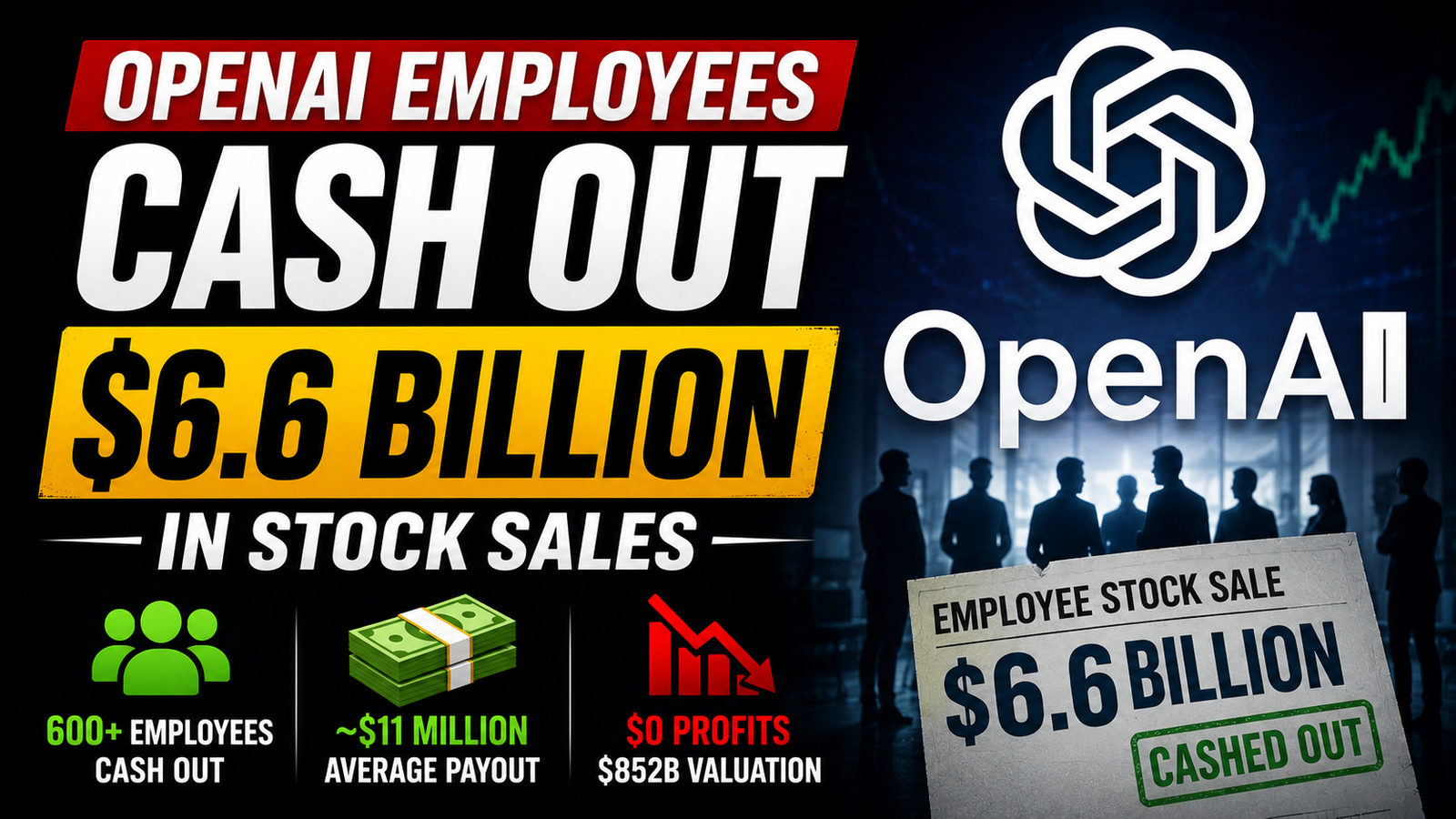
According to a report from the Wall Street Journal, OpenAI employees and former staff members just collectively walked away with a jaw-dropping $6.6 billion through stock sales in October alone.
Yes, you read that correctly. $6.6 billion. In one month.
And in my opinion, this is not just a story about rich tech employees getting even richer. There is actually a lot more going on underneath the surface here that every investor, every crypto enthusiast and every everyday person paying attention to the AI boom really needs to understand. So let me break this down for you in the simplest, most honest way possible.
What Exactly Happened? The Full Story Explained
According to the Wall Street Journal report, more than 600 current and former OpenAI employees participated in what is called a secondary share sale in October. The average payout per person came out to around $11 million each.
Now just let that number sink in for a second. Eleven million dollars per person on average. That is life-changing money for most people on this planet.
What makes this even more remarkable is the timing. These insiders are reportedly cashing out at roughly 30 times the valuation from just three years ago. So if someone held shares worth $1 million back in 2021 or 2022, those same shares are now worth approximately $30 million today. That is an absolutely extraordinary return in an incredibly short period of time.
The Big Number Nobody Can Ignore: $852 Billion Valuation With Zero Profits
Here is where things get genuinely interesting and, I think, a little concerning at the same time.
OpenAI currently carries a valuation of approximately $852 billion. That puts it in the same conversation as some of the most valuable companies ever created in human history. We are talking about a company that is being valued nearly as high as some of the world’s biggest banks and tech giants combined.
But here is the part that really makes you think. OpenAI currently reports zero profits. Not small profits. Not modest profits. Zero.
So you have a company valued at nearly $852 billion that is not yet making money, and more than 600 of its own insiders just sold $6.6 billion worth of shares in a single month. According to me, that combination of facts deserves some serious attention and honest conversation.
What is a Secondary Share Sale and Why Does It Matter to You?
A lot of people hear the term “secondary share sale” and their eyes glaze over immediately. So let me explain this in the simplest possible way.
Normally, employees of private companies like OpenAI cannot easily sell their shares because the company has not gone public through an IPO yet. A secondary share sale is basically a way for insiders to sell their shares to outside investors without the company needing to list publicly on a stock exchange.
Think of it like this. Imagine you own a piece of a very popular private restaurant that has not opened to the general public yet. A secondary sale would be like finding a private buyer who wants to purchase your ownership stake before the restaurant ever officially opens its doors to everyone else.
For OpenAI employees, this was a rare and incredibly valuable opportunity to turn their paper wealth into real cash in their bank accounts. And clearly, a very large number of them jumped at the chance.
Why Are So Many Insiders Selling Right Now?
This is the question that I think a lot of smart observers are quietly asking right now. And it is a completely fair and reasonable thing to wonder about.
When insiders at a company sell large amounts of stock, it does not always mean something negative is happening. There are many legitimate reasons why employees might want to sell. They may want to buy a home, diversify their personal investments, pay off debts or simply enjoy the financial rewards of years of hard work.
However, when more than 600 people sell at the same time and collectively cash out $6.6 billion, and when that same company has zero current profits despite a near $852 billion valuation, it naturally raises some eyebrows among financial analysts and everyday investors alike.
the timing here is a question worth sitting with. Are these insiders simply taking well-deserved profits? Or do some of them have concerns about whether the current valuation is sustainable long-term? Honestly, from the outside we cannot know for certain. But the scale of this sell-off is genuinely significant and worth paying attention to.
What Does This Mean for the Broader AI Sector?
In my honest opinion, this story is about much more than just OpenAI. It is a window into the current state of the entire AI industry.
The AI boom has created extraordinary paper wealth for thousands of people who got in early. Companies are being valued at hundreds of billions of dollars based almost entirely on future potential rather than current profits. And now we are starting to see early insiders move to lock in those gains before the picture becomes clearer.
This mirrors patterns we have seen before in financial history. The dot-com boom of the late 1990s saw similar dynamics where insiders cashed out massively at peak valuations before market corrections followed. I am not saying history will repeat itself exactly, but I do think it is important for everyday people and investors to be aware of these patterns.
Read More: